Slow fashion is easy to endorse and harder to define. It is often reduced to a slogan about buying less, but the idea is more specific than that: choose well made things, wear them for years, and understand who made them.
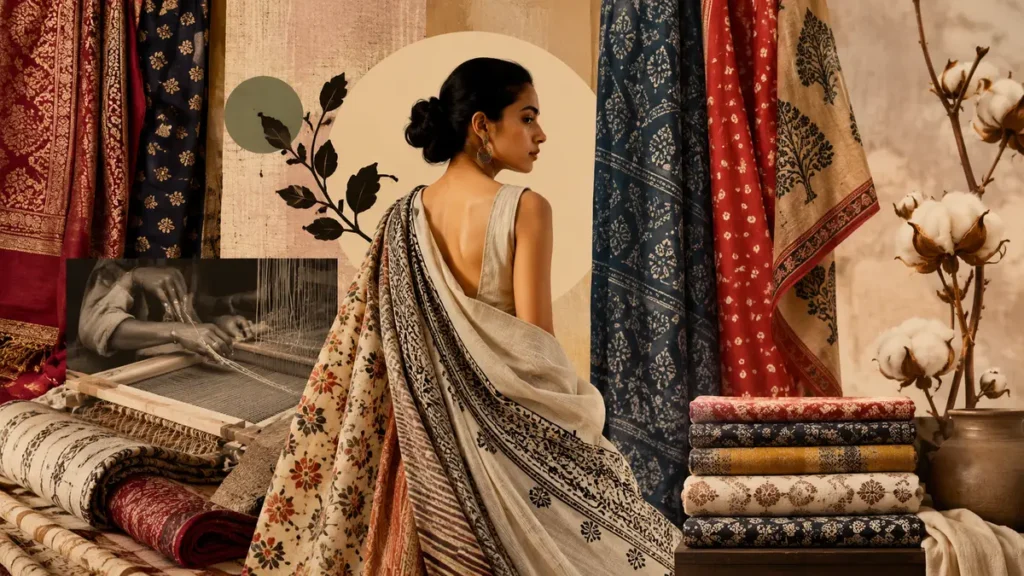
In India, that idea has a natural home in handloom. Here is what slow fashion ethnic wear really changes, and what it asks of you in return.
The problem with the fast cycle
Fast fashion depends on speed and volume. Garments are produced quickly, often under conditions buyers cannot see, and are designed to feel dated within months. Commonly cited estimates put the textile industry at roughly ten percent of global carbon emissions and annual textile waste at around 92 million tonnes. Exact figures vary by source, but the direction is not in dispute.
Wear counts point the same way. A widely repeated claim is that a typical garment gets just seven to ten wears before it is thrown out, which is a brief life for something that consumed water, energy and labour.
What handloom does differently
It uses human power
A handloom is operated by hand, so the weaving itself needs no electricity. That does not make a garment automatically carbon neutral, since fibre, dyeing and transport all count, but it removes one major energy input from the process.
It works in small batches
Handwoven pieces are usually made in limited runs, which means each metre of cloth gets more attention. The small irregularities you sometimes notice, a slight variation in the weave or a subtle shift in dye, are not defects. They are the maker’s fingerprints, and they are why two handwoven pieces are never quite identical.
It supports livelihoods
Handloom is frequently described as one of the largest sources of rural employment in India, with figures of around 3.5 million people often quoted. Whatever the precise number, buying handwoven cloth sends money to weaving communities that depend on steady demand to keep their craft viable.
How to actually practise slow fashion
Buying handloom is a start, but the habit that matters is use. A saree worn fifty times has a very different footprint from one worn three times. That means choosing pieces you genuinely like, caring for them properly and styling them in more than one way.
Think in capsules
A small collection of high quality, mix and match pieces is easier to wear well than a large one. A few sarees, a couple of suit sets and two or three statement dupattas can generate far more outfits than their number suggests, and they simplify daily decisions.
A fair caveat
Not every product labelled sustainable deserves the word, and handloom is not a magic solution. Look for transparency about fibre, dyes and where the piece was woven, and be wary of vague claims. Slow fashion works best as a habit of attention, not a label.
Starting small
If you are new to the idea, begin with one or two durable pieces rather than rebuilding your wardrobe. A well made handloom saree in a fabric you will wear often is a better first step than a large haul. Over time, those choices accumulate into a wardrobe that reflects both your taste and your values.
Conclusion
Slow fashion ethnic wear changes three things at once: how long a garment lasts, who benefits from its making, and how thoughtfully you dress. None of it requires perfection. It simply asks you to buy fewer, better things, wear them often and let the craft behind them count.