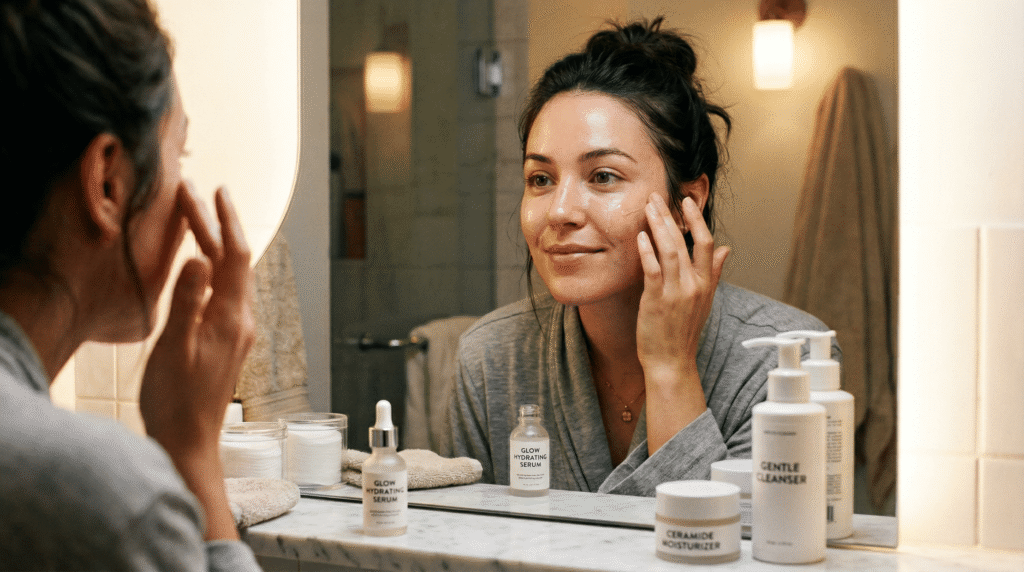
Working nights messes with more than just your sleep schedule — it shows up on your face. I have a friend who’s a nurse doing 12-hour night rotations, and she once told me she “forgot what her skin looked like without dark circles.” These beauty tips for night shift workers aren’t about pretending your body clock isn’t upside down; they’re about working with it instead of against it.
Why Night Shifts Are Hard on Your Skin
Your body repairs skin cells mostly during deep sleep, and when that sleep happens at odd hours or gets cut short, repair slows down. Add irregular meals, dehydration from long shifts, and stress, and you’ve got a recipe for dullness, puffiness, and premature fine lines.
Quick answer: Night shifts disrupt your skin’s natural repair cycle, leading to dullness, dark circles, and dehydration — but adjusting your skincare timing and hydration habits can significantly offset the damage.
Rethink Your “Morning” Routine
If you sleep during the day, your actual morning routine happens at night before your shift starts. Treat that pre-shift routine like your old morning routine used to be — cleanse, hydrate, SPF if you’ll be near windows or sunlight at any point, and a lightweight moisturizer that won’t feel heavy under makeup for hours.
Fight Dark Circles Strategically
Dark circles get worse with disrupted sleep, no way around that. But a few things help:
- Keep an eye cream with caffeine in your bag for a mid-shift dab
- Sleep in a completely dark room during the day — blackout curtains genuinely help skin recovery, not just sleep
- Elevate your head slightly while sleeping to reduce puffiness
- Cold jade roller or spoon trick before your shift, five minutes, works better than people expect
Hydration Matters More Than You Think
Long shifts under harsh fluorescent lighting dry out skin fast. Carry a facial mist you can use mid-shift, and drink water consistently rather than in one big gulp during your break. Dehydrated skin looks tired even when you’re not — and honestly, on a night shift, you probably are tired, so don’t give your skin extra reasons to show it.
Makeup That Survives 12 Hours
Heavy foundation cracks and looks worse by hour eight. Go for a tinted moisturizer or lightweight BB cream instead, setting it with a light dusting of powder only where you get oily — usually the T-zone. A cream blush that you can reapply quickly does more for a “fresh” look than a full face of powder products ever will.
Post-Shift Skincare Isn’t Optional
This is the step most night shift workers skip because they’re exhausted. But washing off the day’s — or night’s — grime before sleeping matters just as much as it would in the morning. Keep it simple: cleanser, a hydrating serum, moisturizer. Five minutes, done.
Sleep Environment Affects Your Skin Too
Beyond blackout curtains, keep your sleep space cool. Overheated rooms during the day increase inflammation and can worsen breakouts. A humidifier helps if you’re in a dry climate, since daytime sleeping in AC often dries skin out more than people realize.
FAQ
Do night shift workers need a different skincare routine than day workers? Not entirely different, but the timing shifts — your “morning” routine happens before your shift, and your “evening” routine happens after you wake up.
Why do dark circles get worse on night shifts? Disrupted sleep patterns reduce collagen production and increase fluid retention under the eyes, making circles and puffiness more visible.
Can caffeine eye cream really help with night shift fatigue-related puffiness? Yes, caffeine constricts blood vessels temporarily, reducing visible puffiness — useful for a quick pre-shift refresh.
What foundation works best for 12-hour night shifts? Lightweight, breathable formulas like tinted moisturizers or BB creams tend to hold up better than heavy full-coverage foundations over long hours.
Should night shift workers wear sunscreen? Yes, if there’s any daylight exposure during commute or before sleeping — UV damage doesn’t care what time zone your schedule is in.
Conclusion
Night shifts aren’t going away, but tired-looking skin doesn’t have to be part of the deal. These beauty tips for night shift workers come down to timing your routine around your actual schedule, staying hydrated, and not skipping the basics just because you’re running on four hours of sleep. Small consistent habits beat any single miracle product.
Suggested Alt Text:
- Image 1: “Nurse applying skincare before starting night shift”
- Image 2: “Caffeine eye cream for tired eyes on night shift”